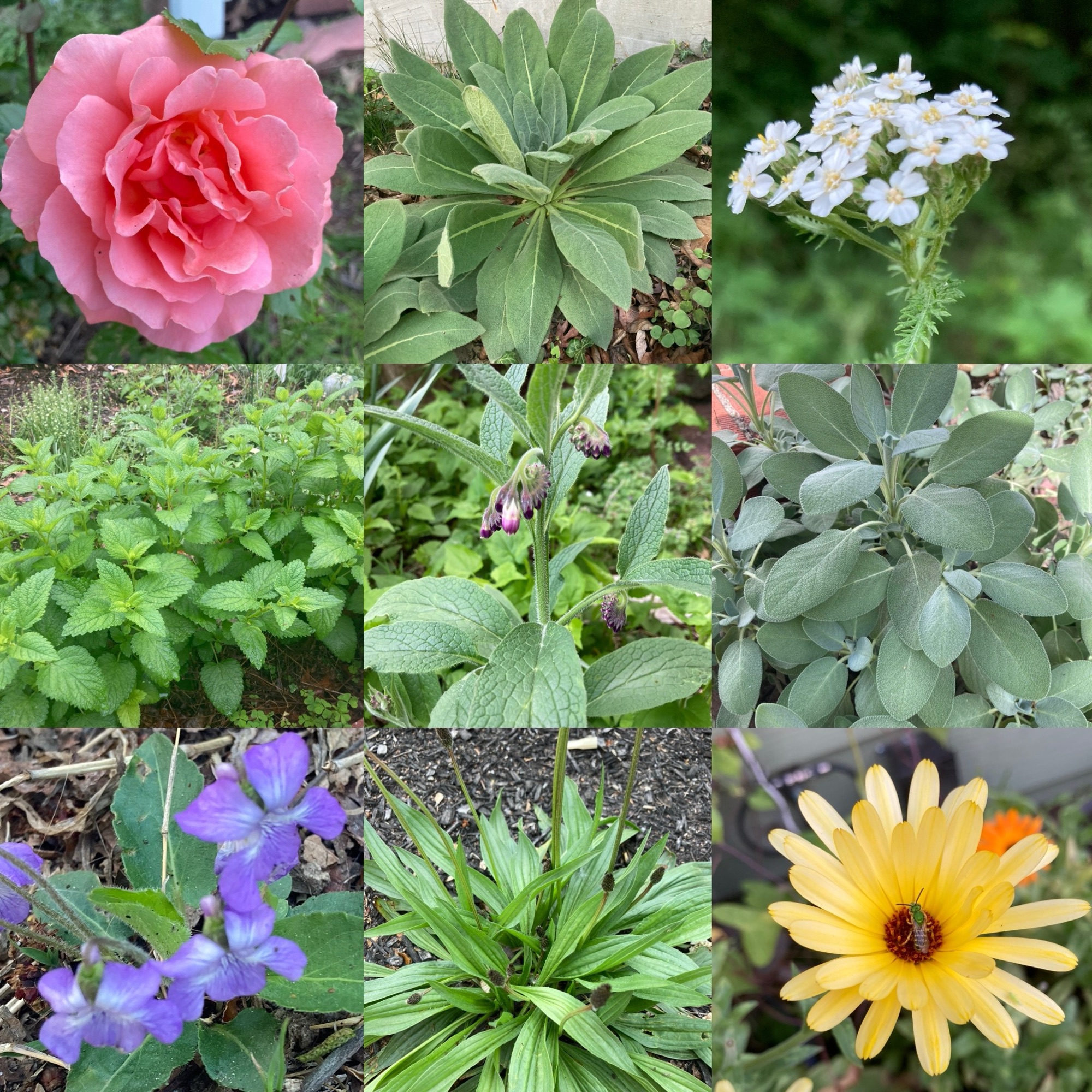
If you are new to studying plants, particularly for the purpose of herbal medicine, it can feel overwhelming sometimes to when you don’t know where to start or how to begin. So when it feels like you need to learn all the plants all at once, set. a reasonable goal for yourself.

Study one new plant per month
I challenge you to study one new plant per month. If possible, choose plants that you can actually observe growing either in your garden or in the wild.
You’ll learn the most if you can see them transition through the different stages of growth and hopefully harvest some of the plant yourself for use in your home apothecary.
Seasonal Use of Herbs
Many people advocate seasonal eating for not only support of local farmers, but your body as well. I advocate a similar approach to herbs.
Seasonal use of herbs is a good principle to follow when you are starting out and don’t know what to use when. Is an herb growing now? Harvest it. Use it. I find that my use of herbs changes based on the season and my body benefits from it.
I like to combine mullein and rose in the summer. I like to use violet in those cold early winter/spring months when only a few things are starting to sprout. Mullein and rose grow in the summer months, and violets in the cold early, early spring days. There is wisdom in using when they are available in nature. If you aren’t sure what herb you should try or study next, go see what is growing outside. That’s a great place to start.
Advantages of Seasonal Herbal Combinations
Let me give you a specific example of seasonal herb use. One summer about five or six years ago, I was struggling. I was tired, and worn out from a busy summer and cross country travels. I got home and I knew that my body needed some support.
One day I was walking through my small garden which was composed of exactly three flower beds, and I was thinking, I wonder what plants could help me. I looked around and I had Roses blooming and mullein was growing in the cracks in my driveway. It had been a long hot summer, we had been away, the garden was neglected, it hadn’t rained in weeks, and I thought, “If these herbs can grown in these conditions, maybe they can help me.”
So, what did I do? I harvested some rose petals and mullein leaves and made an infused oil from them. It helped. Mullein and rose is still one of my favorite oils to use in the summer. Harvest what you have and use it.
Use the Herbs Growing Around You
But, let’s take this approach one step further. Seasonal use of herbs is all well and good if you have a garden and wild places to harvest from. But what if you need to buy your herbs and can’t harvest them yourself? There is nothing wrong with that. I have an entire shelf in my pantry full of dried herbs that I have bought online. If you can’t source an herb locally and you think it might help you, definitely buy it!
But, I believe that people do better not only when plants are used seasonally, but when you are able to uses plants that have been grown in the same area in which you life. I find that I do much better when i use plants that have grown on my property or in my area than ones that I purchase that have been grown from far away places..
Why is this? I don’t believe that the plants I have bought online are damaged, or contaminated, or not processed properly. I am careful about purchasing from companies that I know process their plants carefully and responsibly (Frontier Herbs and Starwest Botanicals are two of my favorites).
My reason for want to use local herbs is simple. I believe that my body responds better to them. The plants you can harvest yourself have lived in the same environment that you do. They are better suited to your climate, have lived through the same stresses, and will be better able to support your body than plants that were grown a world away.
Find what is growing around you and use it! But how do you know what to look for. Use the list below as a guide so that you know what to keep an eye out for each month.
Start Here – Choose a new plant to study each month of the year
These are my top picks by month for studying herbs as they are in season. I based these suggestions roughly on what is growing on average in mid-Atlantic states, but you might need to shift things by a month one way or the other depending on where you live. If you live in the far North, shift everything to 1 month later. If you live in the far south, shift it to a month earlier, or as needed to fit your growing zone.
Recommended Herbs to study each month:
January: Pine and Garlic
February: Violet or Pansy
March: Dandelion and Plantain
April: Nettle or Red Raspberry Leaf
May: Mullein and Comfrey
June: Rose and Lemon Balm
July: Lavender, Basil, Rosemary, Oregano, Thyme, Marjoram or any mint family plant
August: Echinacea and Yarrow
September: Goldenrod
October: Calendula and Borage
November: Sage
December: Rose Hips
Grab our Free Download – Study an Herb a Month in a convenient, printable chart
My Favorite Book for Beginning Herbal Studies

The Herbal Apothecary by JJ Pursell is a great herbal resource for beginners. It covers a wide collection of basic herbs as well as offering instructions for how to make all the different types of remedies with them. I especially appreciate that the book covers contraindications so that you know when to use an plant and when not to.
Jump Start Your Herbal Studies!
Learn How to Make your Own Botany Journal

Check out this post on creating your own Botany Journal. You can use a pretty notebook that you already have, decorate your own, or use our easy, printable, Botany Journal pages to use in a customizable 3-ring binder.
Learn to recognize and use the plants growing around you with our Basic Botany Course!
Got an hour? Learn to recognize the four basic plant families and you’ll be on your way to identifying thousands of plants and putting them to good use.
Leave a Reply